YouTube Killed the £150K TV Budget (And No-one Noticed)
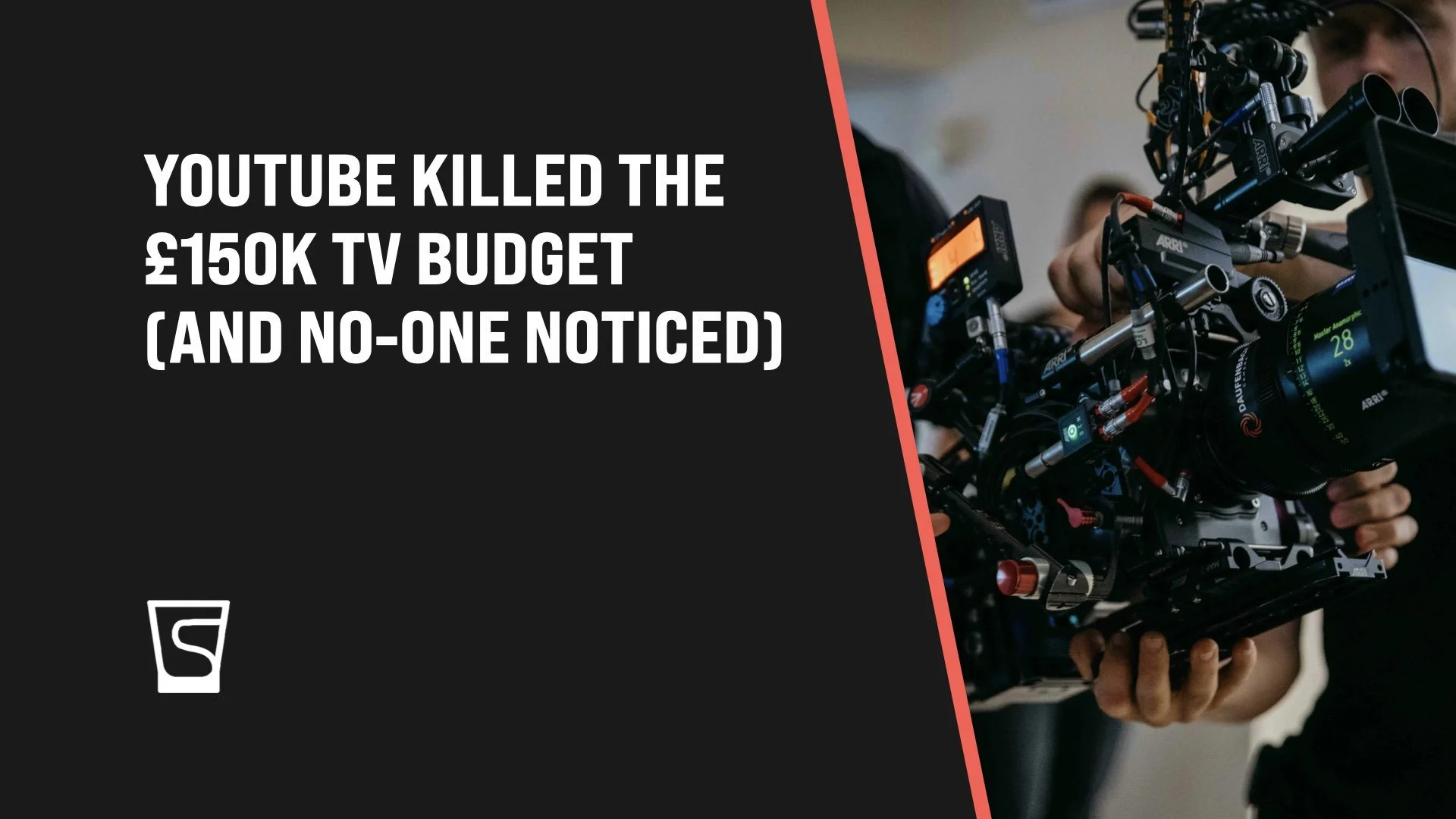
Here's the revolution nobody's talking about: you can now make content that looks like television for less than the catering budget on a traditional TV shoot. Technology has made TV-quality production accessible to anyone willing to learn. And some very smart millennials have already learnt.
The Old TV Model:
A single 30-second TV commercial:
£50,000+ production (minimum)
£100,000+ media buy
6-week production timeline
20-person crew
Broadcast-grade cameras
Professional studio rental
Union rates, insurance, permits
Post-production house
Watched passively (or during bathroom breaks)
Forgotten immediately
The YouTube Model:
A 15-minute episode:
£1,000-3,000 per episode (once you own basic kit)
£0 distribution
1-week turnaround
2 person crew
Consumer cameras that shoot better than broadcast did 5 years ago
Shoot anywhere
Edit on a laptop
Actively chosen by viewers
Available forever
Builds actual relationship
What You Need
The barrier to entry has collapsed. But the barrier to quality hasn’t. You need to plan - TV-quality content requires TV-level planning. Shot lists, story structure, narrative arc. This costs time, not money. Editing matters - you need to know how to structure a story, but you can learn this for free on YouTube (the irony is noted). And you need consistency - one good episode means nothing. A YouTube channel is a format. You need to be able to replicate the quality repeatedly.
What You Don’t Need
Here's what people get wrong: "lo-fi" isn't about being cheap or scrappy or deliberately amateur. It's about being smart.
Traditional TV or commercials producers think, ”We need the best of everything because we're spending hundreds of thousands anyway.”Successful YouTubers think, "We need a compelling idea and quality good enough for a TV screen.”
30-second TV ads has to be perfect because they cost £150K at a minimum. YouTube's 15-minute episode can have a wonky shot or a continuity error because it cost £500 and viewers forgive (in fact they expect) authenticity.
The Uncomfortable Truth
The reason most brands don't make TV-quality YouTube content isn't budget. It's mindset. The only thing standing between brands and TV-quality content isn't money.
It's the willingness to:
Learn new skills (probably from someone half your age)
Accept good enough over perfect
Commit to consistency
Tell stories that deserve 15 minutes of someone's attention
Technology democratised production. YouTube democratised distribution.
The only barrier left is you.
Welcome to the era where a gin brand can make content that rivals Top Gear, for the price of a modest photoshoot, and reaches millions without spending a penny on media.
The question isn't whether you can afford to make TV-quality YouTube content.
The question is whether you can afford not to.